
Table of Contents
Heading
“A store in the United States. A man is waiting in line to pay. In front of him, an elderly lady, with a child in her arms, is chatting with the cashier. He thinks: ‘She’s wasting my time’.
He manages to control his irritation. He reaches the cash register and alludes to the scene he had just witnessed.
The cashier then explains that that is her child. Her husband has recently died, shot in Iraq, she was forced to find a job, and her mother, who takes care of the child, comes to see her every day.
The man feels overwhelmed with compassion.”
This is a real situation, which is narrated by the psychologist and meditation practitioner Jack Kornfield. What does he mean? As a reality perceived in a moment of anger or frustration, it is very different from that perceived in a moment of happiness, harmony and openness of the heart. This is how our emotions and thoughts condition the way we relate to the world.
Our consciousness is the one that creates our reality. “Everything we experience, we experience through the consciousness. However, our consciousness is the one aspect that we hardly care about at all,” says Trinlay Tulku, a Frenchman raised in the tradition of Tibetan Buddhism. This is where meditation comes in. “Our consciousness is like the flame of a candle, and our everyday emotions and concerns are like the wind”. Once the wind calms down, the flame of the consciousness stabilizes and illuminates mental constructs, which thus appear in a new light. This is the moment when the meditator “sees”.
Moreover, he recognizes in the surrounding reality the reflection of his consciousness, of his state of being, and his vision of life changes. When it changes, we can see how much perceptions are conditioned by the state of our consciousness. Meditation is an invitation to no longer identify with our perceptions, in order to gain a new and superior perspective on each moment. Ultimately, this spiritual work allows us to stop being always reactive, so that in the end, to just “be”. The consciousness gradually changes its way of relating to the world until it realizes to what extent it participates in its own creation.
Increasingly Present in Current Life
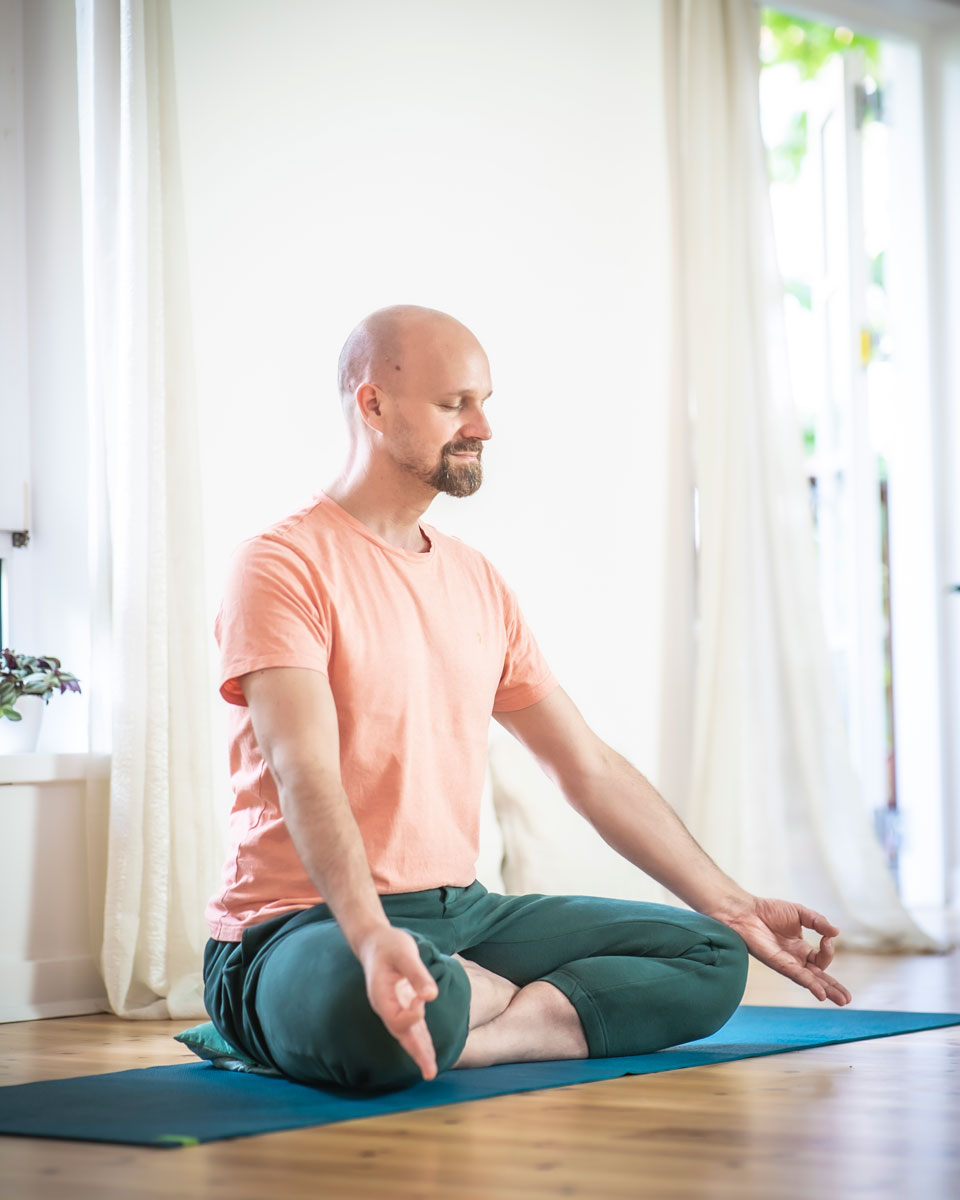
When psychiatrist Richard Davidson met the Dalai Lama in 1992, he already knew about meditation’s ability to change our relationship to emotions. He meditated for 45 minutes daily. He sensed that meditation had a lasting influence on the brain circuits underlying our emotions and therefore our way of thinking. This remained to be proved. Matthieu Ricard, a doctor of molecular biology, was the one who made the connection between meditation and neuroscience. The first recordings confirmed Davidson’s intuitions, who confesses in his book The Emotional Life of the Brain: “I had the feeling that we had just crossed a threshold and that history was about to be written.” A study published in 2004 in the United States made these astonishing results known: the brains of advanced meditation practitioners demonstrated a very high-performance functionality, with a production of gamma waves of an unparalleled amplitude and duration. Other research demonstrated the attention capacities of the practitioners, that far exceeded the norms. Prolonged meditation produced remarkable brain function, both during and after meditation.
Another crucial discovery: meditation has effects after only eight weeks of practice, of one hour per day. A modest practitioner will not overturn the measuring devices, but will be able to support the appearance of appreciable amplifications of certain qualities. In The Emotional Life of the Brain, Richard Davidson lists six emotional characteristics and recommends different types of meditation to modify them: a meditation based on breathing to increase sensitivity to the environment, a body scan for a better perception of self-awareness, etc. This education of our emotional states through meditation, in order to cultivate qualities such as intuition, attention, compassion, constitutes a promising field of research.
In addition to the proven effects on the neural pathways, meditation has also been demonstrated to have the ability to influence the body: accelerating the healing of psoriasis, better recovery in cancer treatment, etc. According to Jon Kabat-Zinn, who introduced meditation to hospitals, recent studies indicate that meditation can have effects on cellular division and even on DNA. Research has piled up with extraordinary speed, thus opening the doors of meditation to hospitals, schools, and prisons in the United States. France is following the same path. On February 20, the 8 p.m. news on France 2 returned to the consumption of psychotropic drugs, where France holds the world record, and presented mindful meditation as an alternative. Fighting stress and exhaustion, healing depression, reducing social insecurity – we demand from meditation the transformation of our reality.
It Gives Relaxation, Health, Internal Balance
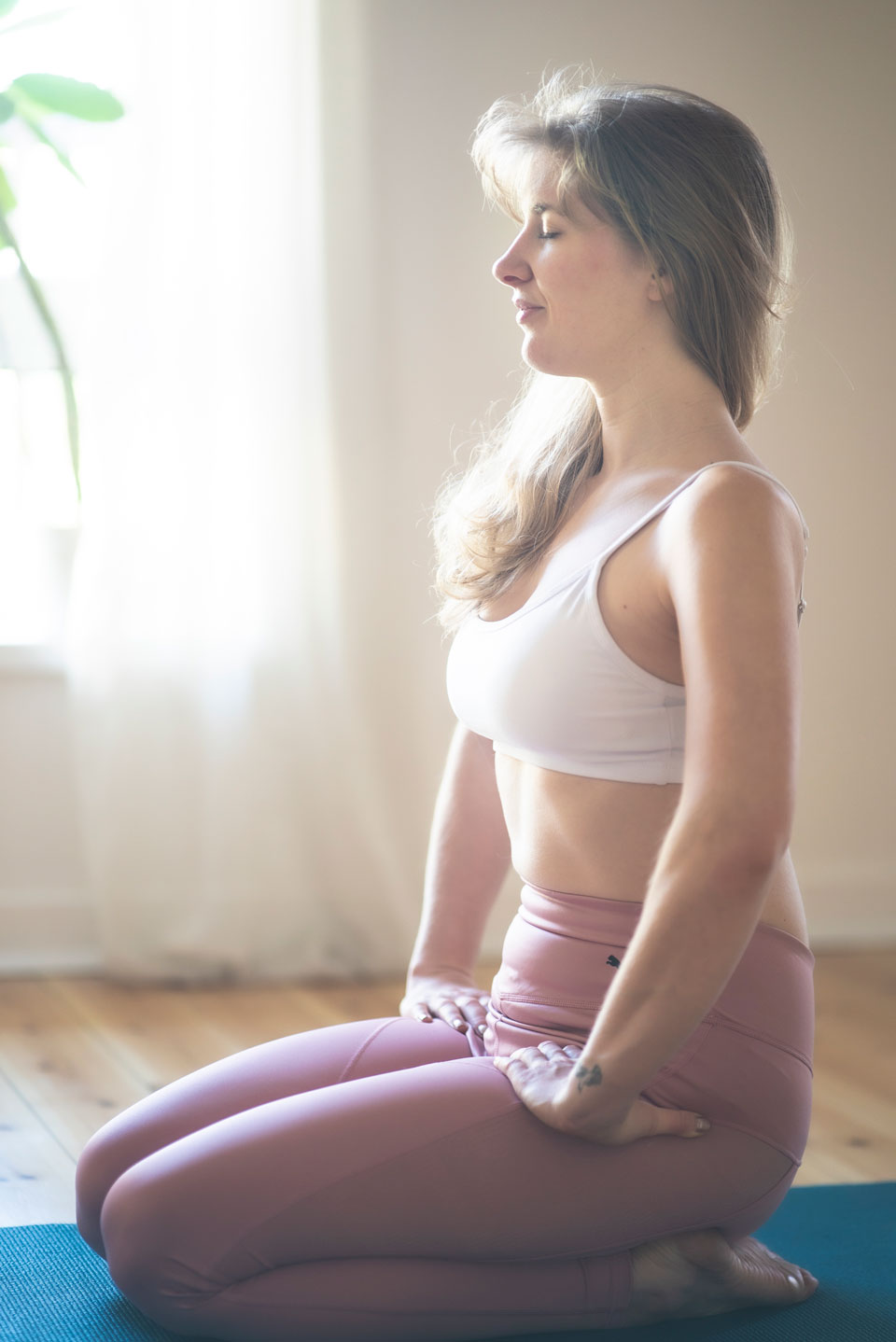
“In my book on altered states of consciousness, written in 1969, there is a section devoted to research on meditation,” says Charles Tart. A psychologist, parapsychologist and a renowned specialist in the field of consciousness, finds it incredible how quickly meditation has become popular in psychotherapy. But to what extent are we prepared to accept the challenges inherent in meditation, to get rid of the usual clichés of thinking, in order to accept that meditation opens us to the unknown?
“There are currently thousands of studies on meditation, but we extract from the entire spectrum of meditative techniques those few aspects that correspond to our culture”, emphasizes Charles Tart. An example: studies show that all types of meditation are useful for reducing stress. It’s great that we will be able to manage our lives in a much more relaxed way. But what are the effects of meditation on the consciousness or on psychic abilities, such as precognition, clairvoyance, telepathy, etc.? “Some studies suggest possibilities in this direction, but they are not so numerous as to form a consistent body of knowledge”, he continues.
In his book Intuitions, written in collaboration with a parapsychologist, cardiac specialist Dr. David O’Hare is interested in the connection between the practice of meditation and the appearance of extrasensory perceptions. “I have been criticized for writing off-topic, because it is not appropriate for a doctor to talk about such aspects. However, it is certain that we are prepared to experience (other) states of consciousness”, he stated. For David O’ Hare, the practice of meditation favors a state of reflection favorable to decision-making. And extrasensory perceptions are part of this process.
Another characteristic of meditative practice: it can lead us to the experience of transcending our ego. “We need our ego, our personality. It is not a question of eliminating it, but of knowing that we are not really one with it”, explains Jack Kornfield. “When I look in the mirror, I see a body that has aged. But what is strange is that I do not feel any older, and this is because the person looking in the mirror is not, in fact, one with the body.”
By allowing us to “dis-identify” with our thoughts and emotions, meditation invites us to ask ourselves: “Who are we?”. What is this part of us that allows us to become observers of our thoughts and emotions and that can even influence the quality of our perceptions? For some thinkers, stabilizing a state of consciousness that transcends the small self is a major goal. It represents that which will allow human beings to fully develop their intuitive, creative, spiritual potential. And meditation is the royal path to this expansion of the field of consciousness. “No other technique – whether it is psychotherapy, or work with the breath, work with the body, psychoanalysis, gestalt therapy, or any other – allows us to develop so much,” emphasizes Ken Wilber, an American philosopher.
“We are about to experience a peaceful revolution”, estimates writer Marc de Smedt. A meditation practitioner and author of several books on the subject, he has long fought for meditation to be considered an exercise we can integrate into our lives. “We cannot limit ourselves to technique,” he specifies, “meditation opens us to a state of being, a way of being present in the world, which is not limited to a quarter of an hour of daily practice.”
Some, such as the philosopher Fabrice Midal, say that a crucial aspect is the protection against an overly utilitarian approach. We do not meditate to be less stressed or more efficient or better pawns in a system based on productivity, but to listen to our deep instincts. In such an approach, it is necessary to accept what this “unknown” reveals to us something that disrupts our concept of reality: “When we step out of the ego, our of “myself”, and against the ego, there remains room for intuition, for love, for freedom. Suddenly, everything is truly much more open. We feel that the usual problems that concern us are too narrow and that there is something much broader. This is transcendence.”
Meditation is, in fact, a way to enter into communion with what we could call “God consciousness.” For example, when we meditate on the state of love, we enter, whether we know it or not, into the occult resonance with the gigantic subtle energies of love, which exist in the Macrocosm and, at the same time, with all beings who have lived and experienced states of love. We thus discover that there is an infinite source, an essential divine source from which all these sublime subtle energies that fill our being, transform us, bring us closer to the state of the perfect cosmic man had sprung.